








Preventing Trench Collapse

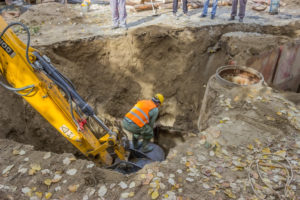
It’s a simple matter of physics, trench walls want to collapse. When they do, it happens quickly and the results can be fatal. That’s why it’s important that you take the proper precautions during excavations that require a trench deeper than 5 feet.
Keep the Surface Clean
Trench collapse occurs when the trench walls cannot contain the pressure put on them by the surrounding soil. While this can be a problem at any depth, it is made worse when excavated materials are piled at the edge of the trench. To reduce the pressure put on trench walls:
- Pile all excavated materials at least 2 feet back from the edge of the trench. If there is not enough room to allow at least 2 feet, remove excavated materials from the immediate location.
- Do not work around the edge of the trench when others are below.
- Keep equipment away from the trench edge. Not only can it cause cave-ins but there is also a chance that it could fall on those working below.
Slope for Stability
Another way to reduce the pressure put on trench walls is to use a sloping or benching system.
- Sloped Walls – A 34-degree slope should be used when digging to prevent a section near the top from giving out and burying the bottom of the trench.
- Benching – When there is enough space available, benching allows a trench to be dug in a series of steps that slowly descend to the deepest point.
Reinforce Trench Walls
Once a trench has been dug, the walls should be braced in a way that will protect those working in the area if a cave-in does occur.
- Construct a support system made with posts, beams, shores or planking and hydraulic jacks.
- Never excavate more than 2 feet past the bottom of the support system.
- Make sure there is always a safe exit route within 25 feet of where you are working in the trench.
Trench Boxes
A trench box can be used as a convenient alternative to building a support system directly into a trench. However, for it to provide the proper protection, it must be used properly.
- Always place the trench box before entering the trench. Enter directly into the box.
- Never move the box while workers are in the trench.
- Never perform work in the trench outside of the box.
For more safety tips, talk to your supervisor or contact Lawley Construction Solutions for more information on construction site safety and health.
This safety matters flyer is for general informational purposes only, and is not intended as medical or legal advice. © 2026 Zywave, Inc. All rights reserved.
More Insight & Tips
-
Fire Safety Tips to for E-Bike Owners
 Paul Dreher
Director of Personal Insurance
Paul Dreher
Director of Personal Insurance
-
Mental Health Safety in Construction
Rob Coppola
Senior Account Executive – Construction Insurance Practice Group
-
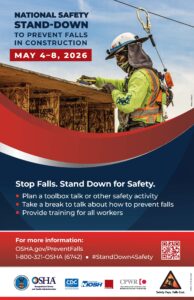
National Safety Stand-Down to Prevent Falls in Construction
Brooke Smith
Safety Manager




Rob Coppola
Senior Account Executive – Construction Insurance Practice Group

Rob’s primary role is to be the lead service team relationship manager and advocate for key Lawley Construction Insurance and Captive clients. He has vast knowledge in exposure identification and specific coverage implementation which will be used to custom-develop your insurance platform and service plan. Rob will make certain that your transition to and relationship with Lawley begins in an exceptional way and stays that way.
View Bio LinkedIn