









Child Vaccinations: Measles, Mumps, & Rubella

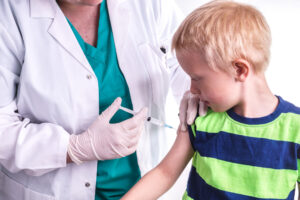
August is National Immunization Month!
Measles, mumps, and rubella are all viruses that can be spread by droplet infections, such as picking up or touching an object (like a handkerchief) that was recently used by an infected person. Fortunately, due to vaccinations, these diseases are nearly nonexistent in the United States.
Measles
Measles is a highly contagious illness caused by a virus called rubeola. The virus can lead to serious complications, such as encephalitis, or inflammation of the brain. People are most susceptible to contracting this illness in early childhood. Measles usually causes fatigue, runny nose, cough, slight fever, and head and back pains. In later stages, it can cause a high fever, Koplik’s spots (small white dots) inside the mouth and a rash that starts around the hairline and spreads downward. Vaccinations have dramatically reduced the incidence of measles to the lowest point in U.S. history, and create a lifetime immunity of 95 percent.
Mumps
Mumps is a paramyxovirus disease that attacks one or both of the parotid glands, the largest salivary glands in the body. Some symptoms of mumps are high fever, loss of appetite, headache, and back pain. In a few rare cases it can cause serious problems, such as deafness, or damage the lining of the brain and spinal cord.
Mumps usually affects children ages 5 to 15, but with proper vaccination, immunity is as high as 95 percent.
Rubella
Rubella is a mild systematic disease caused by a virus. When rubella affects children, it typically causes a mild illness, including enlarged lymph nodes, a slight cold, a fever, and a sore throat. A rash may also appear and spread to the whole body. Typically there are few complications.
Vaccination programs have dramatically reduced the number of cases, and when properly vaccinated, children only have about a 6 to 10 percent chance of contracting rubella.
Vaccination Schedule
Two doses must be given; the first should be at 12 to 15 months of age, and the second between 4 and 6 years old.
Tips for Parents
To make your child’s vaccination experience easier, here are a few tips to keep in mind:
- Tell older children what is going to happen. Explain to them that the vaccination will keep them safe and healthy. Knowing ahead of time what to expect may make it less scary.
- Let your child know that it is okay to be scared. Be sure to praise your child’s courage after the vaccination is over.
- Try to distract your child while the vaccination is being administered. For example, have him or her look away rather than watch, or have him or her count or sing the alphabet.
For more information, call 800-232-4636 – Centers for Disease Control (CDC) National Immunization Hotline, or visit www.cdc.gov/vaccines.
More Insight & Tips
-
10 Myths & Facts About Heart Disease
 Rob Coppola
Senior Account Executive – Construction Insurance Practice Group
Rob Coppola
Senior Account Executive – Construction Insurance Practice Group
-
A Primer on Cardiac Arrest
Rob Coppola
Senior Account Executive – Construction Insurance Practice Group
-
Understanding Gut Health
Tara McPherson
Corporate Wellness Team Lead




Lisa Miller
Client Service Practice Leader

Lisa has built her career in the insurance and employee benefits industry since 1999, bringing more than 25 years of client-focused expertise. She joined Lawley Benefits Group in 2004 as a Medical Account Executive, managing key health insurance accounts and quickly becoming a trusted advisor.
View Bio LinkedIn