







Blog

  • Accidents Happen, Minimize Mounting & Dismounting Injuries

    Accidents Happen, Minimize Mounting & Dismounting Injuries

    Look before you leap, better yet…don’t leap.  Because jumping down off large equipment is a common practice for construction workers, it’s no surprise that lower back, knee, ankle and neck injuries occur more frequently. Regardless of the type of equipment you work with, mounting and dismounting safely should always be top of mind.

    Reduce Risk of Injuries

    To reduce your risk of injuries, follow these simple mounting and dismounting instructions for trucks and other tall equipment or machinery.

    • When using a new piece of machinery, become familiar with proper mounting and dismounting procedures.
    • When a person jumps from a height of more than one foot, the force that goes through the body is about 14 times the person’s body weight. In other words, a 165-pound man who jumps out of construction equipment or any other high surface is exerting 2,310 pounds of force on his body. This can cause injury to bones, tendons and cartilage. And if you’re doing this multiple times every workday, the damage to the body can be extensive.
    • When dismounting and mounting, maintain three-point contact. This means having contact with the construction equipment by either one foot and two hands or one hand and two feet. The smaller the triangle you form with your body, the more stable you are.
    • Always face the vehicle, both when mounting and dismounting.
    • Look at the surface below before stepping and make sure it is even to prevent ankle and knee injuries.
    • Never mount or dismount moving equipment.
    • Do not mount or dismount with anything, including tools, in your hands. Not only does it throw the body off-balance, it also reduces your chance of recovering your balance if you do slip. Use a drop rope to raise and lower supplies, tools and equipment instead.
    • Handholds and footholds are on the equipment for a reason—use them.
    • Wear appropriate clothing. Loose or torn clothing can get caught on equipment when you are jumping down instead of climbing down. In slippery conditions, wear proper footwear to prevent slipping hazards.
    • Proper vehicle maintenance also contributes to the safe mounting and dismounting of equipment. Make sure running boards, treads, steps, footholds and platforms are kept clear. Hazards like ice, snow and grease could cause slips, trips and falls.

    To lessen your risk of injury, follow these simple mounting and dismounting instructions for trucks and other construction equipment and machinery.

  • Liability Limits and Economic Downturn: Not the Time to Limit Coverage

    Liability Limits and Economic Downturn: Not the Time to Limit Coverage

    While feared by some, the uncertainty of economic downturns is often seen as a cyclic elimination of inefficient businesses. It’s your chance to expand and seize market shares relinquished by weaker competitors. However, the companies that successfully weather these tough times relatively unscathed could ultimately find themselves facing uninsured risks in the long term.   Worry not, Lawley has compiled some tips to keep your business prospering well into the next economic cycle.

    Not the Time to Limit Liability

    It’s no secret that the financial security of your business hinges on that of your partners, vendors and suppliers and that in tough times, everyone is looking for a way to cut costs.
    Never rely on the insurance coverage of your business partners to protect your assets or protect against third-party liability claims. In the event of financial insolvency, a business’s partner organizations could eventually be held liable for claims filed against it. Even healthy, well-insured partner organizations are no substitute for comprehensive liability coverage for your business.

    Ultimately, in order to protect your company, it may be a wise long-term investment to expand your coverage limits. While it may be tempting to cut costs by limiting coverage, you could risk paying out of pocket for hefty claims or settlements.

    An important way to protect your company from the enormous cost of specialty trade contractor failure, is to transfer the risk of project completion through surety bonds.

    Secure Seamless Contracts

    In a turbulent economic climate, it is more important than ever to have thorough, seamless contracts. They should clearly outline the obligation of each party and discuss dispute resolution policies so that if something goes wrong, you avoid a messy and expensive disagreement.

    In order to protect your company, it may be a wise long-term investment to expand your coverage limits during an economic downturn.

    It is never a good business decision to sign a contract hastily, but especially in a difficult economic time, be sure to look into all the risks and legal ramifications. Small companies who partner with larger companies are often strong-armed into making decisions with which they are not completely comfortable.

    Exploit Change with Caution

    For many construction companies, change is the best way of reacting to an economic crisis. Offering new services or exploring different customer bases can be a crucial factor in surviving difficult economic times. While expanding in either of these ways can revolutionize your business and keep you afloat in tough times, it could also expose you to additional liability you had not dealt with before.

    When you experiment with new products or services, you will inevitably face a learning curve, which puts you at a larger risk of facing liability claims. You may want to consider purchasing additional lines of coverage to protect yourself, as your surplus lines insurance policy may only cover claims arising from existing projects or services.

    Unexpected Consequences

    By the same token, shifting or expanding your customer base may put you at risk of unexpected lawsuits. The same product or service may evoke disparate reactions in different sectors of the market. This is another instance in which it is important to be covered for potential liabilities resulting from a change in your business. Contact Lawley today to be sure your plan for escaping the economic downturn unscathed does not backfire.

  • Winter is Coming, Prepare Your Home Today!

    Winter is Coming, Prepare Your Home Today!

    Fall is here, and along with it comes the familiar reminders that winter is quickly approaching!

    Cover patio furniture – Patio furniture wears easily in climate change. If possible, it is recommended to store patio furniture in a shed or garage. If that’s not possible, cover them with a tarp or specifically designed covers is a great way to minimize weather damage to your furniture.

    Cover the air conditioner— The coils on the top and sides of air conditioners can be easily damaged. Wet leaves and debris can ruin these coils which will cause air conditioners to run less effectively, and could even ruin it completely. By simply covering the coils, a costly repair could be prevented.

    Cover crawlspace vents— With crawlspaces in homes, there are likely vents on the outside of the foundation. In the summer, it is recommended to open the vents to let air through to prevent mold growth; however, in the winter the vents should be closed and covered with Styrofoam or crawl space vent covers. Doing so helps you heat a home more efficiently.

    Put hoses away and cover outside faucets— When water freezes, it expands. If there is water left in the hose, it will likely freeze and tear. Undo the hose, drain it, and store it in a shed or garage for the winter to prevent it from breaking. The faucet heads should also be protected from the cold weather. Styrofoam faucet covers go directly over the faucet to keep heat in and prevent a possible break from freezing.

    Insulate pipes and keep your home heated— With traveling this winter season, it is still important to maintain heat in the home. Pipes are easily frozen and could burst from the pressure. Insulating the pipes will also help prevent freezing from occurring.

    Replace the air filter—Furnaces suck in air and use filters to sift out any particles from being blown onto the coils. A clean filter will help furnaces run efficiently and increase the life of your furnace. Depending on the filter quality, a good rule of thumb is to replace it every 1-3 months.

    Drain the gas from your mower—This is one maintenance item individuals seem to forget about. When storing a mower for the winter, it is important to either drain the gas from the mower or let it run until the gas has been used up. If not done, moisture could seep into the gas tank and ruin your mower.

    Taking a little time to winterize your home could help you prevent a loss and save you thousands of dollars in the long run. Talk to Lawley today. Our dedicated team of insurance professionals will get to know your personalized needs and provide you with options to make an informed decision.

  • Tips for a Spooktacular Halloween

    Tips for a Spooktacular Halloween

    Did You Know?

    • More homeowners claims are filed on Halloween than ANY other day of the year.
    • The average cost of auto claims on Halloween are 9% higher than the annual average.

    Protect Your Auto:

    • Park in a garage or near lights.
    • Close windows and lock doors.
    • Set car alarms to deter thieves.

    Protect Your Home:

    • Avoid décor that can be easily thrown.
    • Pricey décor could entice thieves.
    • A well-lit home deters burglars.
    • If you have a home security system, post a sign saying so.

    Protect The Kids:

    • Leash the dog – don’t let aggressive dogs rush people.
    • Appropriate costumes – Wear comfortable shoes. Ensure visibility out of masks. Avoid sharp objects as accessories.
    • Drive slowly – Beware of kids darting across streets.

    Hosting a Party?

    • Keep sidewalks, stairs and paths clear.
    • Provide healthier, low-calorie treats.
    • Teach children how to dial 9-1-1 and when it’s appropriate.

    Trick or Treat:

    • Children under 12 should always be supervised by an adult.
    • Stick to familiar neighborhoods.
    • Give extra caution when driving. The most popular trick-or-treating hours are from 5:30-9:30 p.m.

    In the unexpected event where you may need to report a claim, our in-house claims consultants will act as your advocates to assist you in recovering quickly should you experience a loss. That is the Lawley difference. If you need us, we will be there with you every step of the way, guiding you through the process, clearing any hurdles for you and making your path easier.


    Thank you to our friends at Central for originally posting this content.

  • Why Are Auto Rates Increasing?

    Why Are Auto Rates Increasing?

    One issue that has been consistent throughout the year is an increase in auto insurance rates. If you’ve seen a rate increase this year and have wondered why (especially if you have a clean driving record), this blog post is for you.

    Why are rates going up? There are three primary reasons:

    Distracted Driving:

    The National Highway Traffic Safety Administration reports that 71% of young drivers have admitted to texting and driving. At 55 miles per hour, the average text message takes your eyes off the road long enough to cover a football field. Do the math and tell me that’s not a serious problem. In fact, the statistics are already telling us it’s a problem. For example, in 2015 more driving-related deaths occurred in any year since 1966. Worse yet, we’re on pace for a two-year increase of 18%.

    Technology in Vehicles:

    A couple of our insurance companies have specifically cited this as a large factor in increased claim payments. The rear of cars used to be tail lights and a bumper. Now they have backup sensors, cameras, kick-activated tailgate sensors, etc. In 2005, a Ford side mirror cost $845. In 2015, it cost $1,349. Again, think about the turn signals that are now inside mirrors along with blind spot warning lights and mirror defrosters. That’s a lot more technology in the same amount of space.

    Health Care Costs:

    We’re sure you’ll agree that medical costs are significantly higher than they’ve ever been. Therefore, an accident that has a bodily injury component to it has a much higher overall claim cost than it did just a few years ago. Auto insurance rate increases haven’t even been as close to how much health insurance rates have gone up recently. Again, do the math on that and see where the auto insurance industry might be falling a tad short.

    Contact Lawley today for inquires regarding auto rates — we always make sure to get you the right insurance program for your unique needs. We have a dedicated team of professionals who will take care of you and your family with their 100 years of combined experience.

  • Driving Personal Cars for Business Use – A Good Idea?

    Driving Personal Cars for Business Use – A Good Idea?

    It is important to consider the risk that occurs from driving personal cars for business use.

    There are many situations in which an employee drives his or her personal automobile to perform a business-related task or activity:

    • Travel between work sites
    • Client visits
    • Transportation of clients
    • Travel home from work-related events
    • Quick stops to pick up food for a meeting

    Driving a personal automobile in lieu of a company-owned vehicle may seem to minimize an employer’s liability, but companies can be held partially liable for damages in the event of an accident. Additionally, if an insurance provider discovers the individual was driving for business, it may take action against the employer for subrogation purposes.

    If the employee is making a work-related phone call or taking part in any business-related activity, the employer will be held accountable. When employees will be driving their own cars for work, there are several actions you can take as an employer to mitigate risk.

    Purchase Hired and Non-owned Coverage:
    Any company that allows or requires employees to use their personal vehicles for business should either purchase hired and non-owned coverage or add it to an existing automobile policy. Hired coverage is for situations in which autos are not owned by the company or the driver, and non-owned coverage protects the company against liability when vehicles that are owned by employees are used on behalf of the company. In the event of an accident, these policies supplement the driver’s personal auto policy, which is typically activated first. For minimal yearly premiums, these policies generally protect the company only, not the car or the driver.

    When employees drive their own cars for work, there are several actions you can take as an employer to mitigate risk.

    Use a Company Policy to Reduce Risk:
    According to estimates by the National Safety Council, over one million car crashes annually are attributable to cellphone use while driving. Since distracted driving accidents can have serious implications for companies, a company policy that emphasizes the importance of driving attentively and restricts the use of mobile phones is essential to preventing employee accidents in all vehicles, both personal and company-owned. In addition, the policy should clearly state when the use of a personal vehicle will be expected or allowed, and all employee job descriptions should specify when driving a personal vehicle will be a job function. As a condition to employment and thereafter at least on a yearly basis, those employees driving personal vehicles should be required to provide:

    • Proof of a driver’s license
    • Motor vehicle safety inspection certificates
    • Copy of insurance certificates proving liability coverage at or above an established company limit including personal injury and medical limits
    • Proof that the employee has declared the use of the auto for business to his or her insurer
    • Exhaustive lists of all prescribed controlled medications

    Enforce the Policy:
    After the driving policy has been instated, it should be actively communicated and enforced. Managers of employees utilizing personal vehicles should be directed to monitor the safety and maintenance of those vehicles. Employees found out of compliance with the company policy should be subject to reassignment or termination. It is every employer’s responsibility to ensure its employees’ safety on the job, and those that use personal vehicles on business are no exception.

    Contact the insurance professionals at Lawley for more help assessing your company’s risk regarding the use of personal vehicles, or to learn more about hired and non-owned coverage.

  • Open Enrollment Tips

    Open Enrollment Tips

    At Lawley, we work with a lot of companies to provide employee benefits to their associates. Many of our clients have personnel with “open enrollment” questions. We wanted to make it simple! As an employee, making wise decisions about your benefits requires planning and it is often easier to elect the same coverage that you had during the previous plan year. However, last year’s coverage may not suit you again, and there may be new plans that better meet your needs.

    Follow these tips to make the best benefit decisions for you and your family:

    • Assess your health and the health of your family members before making any selections. For instance, plans with higher monthly premiums and lower copays and deductibles are best for those who will use a lot of health care services over the course of the year. Yet, healthy individuals and families may save a great deal by selecting a plan with low premiums and a high deductible.
    • Examine how you allocated benefits last year beyond just health care – retirement, dental, flexible spending accounts, etc. If you invested in some of these benefits in the past and did not use them, consider omitting this time around.
    • Attend all company meetings designed to explain new benefit offerings. These venues are great for learning the ins and outs of new plans and changes to existing plans.
    • Utilize plan selection and comparison tools. These resources can analyze your claims from the previous year and then determine which plan would be most appropriate in the coming year.
    • Before selecting a plan, verify that your doctor and hospital of choice are part of the network of health care providers that are covered. If they are not included, you will pay significantly more for their services.
    • Participate in wellness and disease management programs to not only become healthier, but also to receive potential discounts on your health benefits.
    • Utilize tax-free benefits such as health savings accounts (HSAs), flexible spending accounts (FSAs) and dependent care spending accounts. These savings vehicles can provide tremendous tax advantages, as contributions are made with before-tax income. Reimbursements from these accounts are also tax-free. They can be used to pay for prescriptions, deductibles and health-related costs that are not covered by your insurance (braces, eye glasses, etc.). HSAs are also a great way to save for future medical costs.
    • Are you saving enough to be comfortable during retirement? If not, change your retirement plan withholdings. Don’t forget to take advantage of your company match in your retirement account. This is free money for the future.

    Though we normally work with employers regarding the benefits plans they provide to their employees, Lawley‘s team of consultants is happy to help with any questions you might have as an employee during “open enrollment season” and beyond.

  • 10 Tips to Prevent Chimney Fires

    10 Tips to Prevent Chimney Fires

    This article originated on PropertyCasualty360

    Chimneys, in particular, require upkeep.

    A chimney that is dirty, blocked or in disrepair can inhibit proper venting of smoke up the flue, and can also cause a chimney fire. Nearly all residential fires originating in the chimney are preventable, according to the New York State Homeland Security and Emergency Services.

    Chimney fires account for 75% of home heating fires, meaning homeowners should actively monitor their chimneys. Homeowners looking to avoid damage to their property and increased premiums should prepare for fires by checking their smoke alarms and updating their emergency plan.

    The Chimney Safety Institute of America recommends looking for these signs of a pending chimney fire: a loud cracking and popping noise; a lot of dense smoke; or an intense, hot smell.

    In honor of National Chimney Safety Week 2018 — held Sept. 30 to Oct. 6 — here are 10 tips to prevent chimney fires:

    • Have your chimney inspected and cleaned at least once a year by a professional, and more than that if creosote builds up on your chimney walls more rapidly.
    • Consider installing a stainless steel liner that will withstand even the highest temperatures and will keep the embers contained.
    • Watch out for soot buildup. Soot is softer than creosote, but is also flammable and should be cleaned up regularly.
    • Between the professional inspects and cleanings, be sure to check and monitor your wood-burning fireplace for signs of buildup or other problems.
    • Clean the interior of your fireplace, including the floor, regularly. Sweep or vacuum up cold ashes.
    • Your chimney has a cap on the top of it with open sides (usually covered in mesh to keep rain, birds, squirrels and debris out). Make sure this cap is regularly inspected and replaced when necessary.
    • Check the interior of your fireplace for creosote buildup. It is flammable, therefore too much buildup is a fire hazard and should be cleaned away with creosote remover as soon as possible.
    • Any time there is smoke indoors from your fireplace, troubleshoot and immediately correct any problems you find. Possible causes are a dirty chimney, soot or creosote buildup, other debris, a sample that isn’t open or fully opened, or wood not building completely.
    • To improve your fireplace’s efficiency, you should also consider installing heat-proof glass doors to protect against heat loss and a fan or blower to direct heat into the room.
    • If possible, burn hardwoods like maple, oak, ash and birch. These woods burn hot and long, are cleaner to handle, and have less pitched and sap. They also tend to leave less creosote buildup but can be more expensive.

    Contact Lawley today. We are committed to delivering the most appropriate personal insurance so you do not have to worry if you are properly covered. Our dedicated team of insurance professionals will get to know your personalized needs and provide you with options to make an informed decision.

  • After Florence, Tackling Flood Damage to Dwellings

    After Florence, Tackling Flood Damage to Dwellings

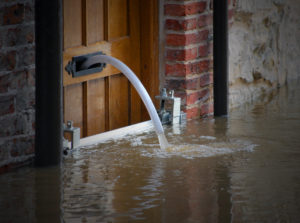
    Although Hurricane Florence is gone, the destruction and damage remain. Hurricane season runs until Nov. 30, which means that the potential for serious flooding isn’t over. Add in autumn rains with rivers, streams and lakes possibly overflowing their banks, and homeowners may still have to contend with wet, soggy buildings and saturated personal property.

    Dealing with flood damage in a dwelling is a bucket-list worst experience. There, that’s right out on the table. A home becomes a mess of such significance that it’s hard to see as a home; it’s a depressing mess that quickly becomes an emotional and logistical monster.

    Surface water floods are daunting and potentially dangerous within which to conduct recovery. Any surface flood water is immediately considered Category 3 water, as defined by the Institute of Inspection Cleaning and Restoration Certification (IICRC). It’s often called “black water” and is described as “grossly contaminated” by IICRC, which sets standards for professional water damage restoration.

    Yuck — now what? Flooring, walls, doors, personal effects, Grandma’s clock, the dog’s bed, sofas, beds, you name it, covered in gunk. Walls popping bursts of what appears to be mold, the air in the house thick enough to cut and smelling of the back corner of the basement. What’s to be done with it? Thank goodness the most useful tools you will need to turn that “what” into action can be found within yourself: organization, understanding, elbow grease and a little dose of patience.

    You’ve Got This
    First, be sure you’ve filed a claim. Then, ask Lawley to provide a quote on a flood insurance policy. Do it now as there is a 30-day waiting period for coverage after you apply for the policy, and you want to be ready for the next time.

    Register with Government Agencies

    You will need the claim information and outcome (denial or payment) to provide to the government agency with which you register for assistance. Yes, you do want to register with government agencies. There might be immediate assistance for living costs that the Federal Emergency Management Agency (FEMA) provides; FEMA also has guidance to help coordinate efforts with local aid organizations or government agencies. The U.S. Small Business Administration (SBA) coordinates with FEMA, but the aid from the SBA is typically in the form of low-interest loans. Absent someone handing you cash, it’s the next best step. Both agencies accept applications online, and a smartphone works fine for access.

    You should also ask your neighbors what they’re doing. Share information — crowd-sourcing what comes next can be very useful.

    The Sorting Process
    You’ve got a mess, but when you look at it with a sense of urgency you’ll get a little guidance on setting priorities. You’ll see personal effects and house finishes that are destroyed, even to your unpracticed eye. If you list the work to be done, personal effects are the first things to deal with as they’re in the way of the rest of the work. If they’ve been exposed to water, they are total losses so they’ve got to go

    Again, organization is key:

    • Make a list of the items that you remove from the insured premises (description, quantity, model numbers, and unique identification)
    • Take video or still pictures of each item
    • Put on your protective hand covers, eye protection and respirator
    • Haul that stuff out to a dumpster, the curb or your local waste disposal site.

    Demo Time
    Once all the personal effects are out of the house, consider what portion of the dwelling needs to be removed. Don’t wait for an insurance adjuster or government person to see the damage, because waiting can make hazardous conditions worse. Take pictures and tell the claims processor what you’re planning.

    Before you start swinging a sledgehammer, however, step back and consider:

    • Am I or my family physically capable of doing the work? Even healthy persons are subject to problems due to the unsanitary conditions, the unconditioned air in the house, pathogens that may be present, and physical dangers such as soft flooring, sharp objects, the weight of wet and damaged property, or asbestos content. Many hands doing safe work is key. Again, working with neighbors or family may be your best approach.
    • Are there unsafe conditions that may need professional guidance? Check out asbestos resources, mold resources and speak with local authorities for additional guidance. Be sure to protect yourself as well as possible if you do the work yourself. Be sure the space is well-ventilated, use respirators or face masks and eye covering, and wear safe shoes or high, waterproof boots. Wash your hands regularly.

    The Practical Side
    Expect that the demolition will task your physical and mental well-being. Drink lots of water, get lots of rest and try to eat well, not conveniently. Ibuprofen will be your friend. Pile all that demo stuff at the curb or in a dumpster, and know that all your neighbors will be doing the same.

    Once damaged walls, fixtures and flooring are out and power is available, you need to dry out the exposed framing. You would be well-served to hire a professional to manage the drying and sanitizing process, although that may be easier said than done because the restoration companies will be busy.

    If you’re doing the drying yourself, consider two actions that are needed: air movement at the damaged areas and dehumidification. The movement evaporates the moisture from the materials and the dehumidification allows you to move the moisture out in liquid form. Be prepared for this process to take time — even days — after an extreme flooding event.

    Then, hard surfaces and dried framing should be wiped down with a sanitizing solution of water and bleach (1/2 cup bleach to two gallons water). You might even need a mold retardant spray to treat the surfaces in addition to the sanitizing solution.

    On to Repairs
    Once the damage to the structure has been removed and dried, consider what needs to be repaired for the dwelling and compile an estimate. This step may well require a contractor, which is a whole other challenge. Consult with an architect or engineer, and local authorities to see whether you need to take additional action to protect your property from future flooding or whether there are floodplain issues to address. In the aftermath of Hurricane Florence, for example, some homeowners may be required to raise their homes several feet above the current elevation.

    Contact Lawley today. We know you care about your family first and foremost. We are a family-owned business that understands this – Lawley Insurance has been protecting individuals and families for over 60 years. We value the trust we have earned over the years more than anything and will spend the necessary time to get you the coverage you really need and the right protection.


    (This article was originally published on PropertyCasualty360)

  • Lawley Insurance Advisor Michael Bandini Earns ERIS® (Energy Risk & Insurance Specialist) Designation

    Lawley Insurance Advisor Michael Bandini Earns ERIS® (Energy Risk & Insurance Specialist) Designation

    BUFFALO, NY | Michael Bandini, Lawley Insurance Advisor, has earned his ERIS® (Energy Risk & Insurance Specialist) Designation. Lawley is very proud to have this designation placed on one of their senior advisors.

    This program is a specialized curriculum focusing on the insurance and risk management needs of the energy industry. Examples of companies in the energy industry include those dedicated to providing power like solar, electric, oil, or natural gas. Those who complete the program are entitled to display the ERIS certification to attest to their knowledge of energy insurance, risk management and dedication to the industry.

    Bandini says, “I am really excited to receive this designation and bring it to Lawley. Energy companies have very serious and unique risks that need attention. And that attention should be given by someone with the proper training and expertise. I look forward to building partnerships with companies and individuals in the energy field and will provide the best service and knowledge possible to their operations.”

    Cindy Vizzi, Lawley’s Director of Sales Administration, says “We are always looking to refine the skills of our team. By earning this designation, Michael will be able to anticipate the needs of clients and prospects in the energy industry. It is a great benefit and addition to his, and our, insurance infrastructure.”

    What does receiving an ERIS® entail?

    • Completing the five-part curriculum entitles a person to the ERIS certification.
    • Energy financial and risk professionals who obtain the certification will have the knowledge to make wiser insurance and risk management decisions for their employers and work more effectively with their agents/brokers.
    • Obtaining the ERIS certification will increase the competence, confidence, and credibility of insurance professionals who sell or underwrite insurance for contractors.
    • A CFO, CFM, controller, or risk manager who buys insurance from an ERIS designee will know he or she is dealing with someone who is knowledgeable about the specialized needs of energy companies. 
    (Originally published description on Irmi’s website)

    About IRMI & ERIS

    The Energy Risk and Insurance Specialist (ERIS®)  continuing education program was developed by IRMI to provide an opportunity for insurance agents, brokers, customer service representatives, underwriters, adjusters, and in-house risk managers or insurance buyers to gain specialized expertise in energy insurance and risk management. Completing the ERIS certification will ensure that the agent, broker, underwriter, or insurance purchaser understands the most important insurance needs of the energy industry.

    Who is Michael Bandini?

    Michael Bandini joined Lawley in 2011 as an Advisor of Property & Casualty Insurance. Mike is a Construction Risk & Insurance Specialist (CRIS) and actively pursuing his Chartered Property & Casualty Underwriter designation (CPCU). Mike’s focus has expanded to Life Sciences/Bio Technology, Professional Liability/Legal Malpractice, Public Entities/Municipalities and Cleantech Energy industries. Mike now has his ERIS® designation.

    Read more about Michael in his full bio here.

    ABOUT LAWLEY

    Lawley is a privately-owned, independent regional insurance firm specializing in property, casualty and personal insurance, employee benefits and risk management consulting and ranked among the 100 Largest Insurance Brokers in the U.S., according to Business Insurance magazine.

    For over 60 years, Lawley’s team of more than 400 associates have developed customized property, casualty, surety and benefits insurance programs for businesses and municipalities of all sizes along with personalized protection for individuals and their families. Lawley is consistently recognized as one of the Best Places to Work by Buffalo Business First.

    Headquartered in Buffalo, NY, Lawley has branch offices across New York in Amherst, Batavia, Dunkirk, Jamestown, Mahopac, Plainview, Purchase and Rochester along with Darien, Connecticut and Florham Park, New Jersey. To find out more, visit lawleyinsurance.com.